Brazilian Jiu Jitsu is a martial art and combat sport focused on grappling or ground fighting. There is no striking in jiu jitsu. You can think of jiu jitsu as much like wrestling, but with a different set of rules. The point of jiu jitsu is to use techniques to gain control and submit an opponent by a choke or joint lock. The variety of jiu jitsu that we practice was originally developed in Brazil before it came to America where it has become part of the “mix” in mixed martial arts.
Though athletic attributes make a difference in jiu jitsu, the point of the art is to develop skills and strategies that are effective against opponents who might physically over match you.
The truly rewarding part of jiu jitsu is developing your “game,” which is the set of techniques, tactics, and outright tricks that you mastered over the years. You and your training partners will be part of an ever-evolving process of honing and correcting a tool box of effective ground fighting techniques. This fluid process will set your body and mind on an infinite path of improvement.
What is Brazillian Jiu Jitsu?
To Gi or Not to Gi? That is the question!
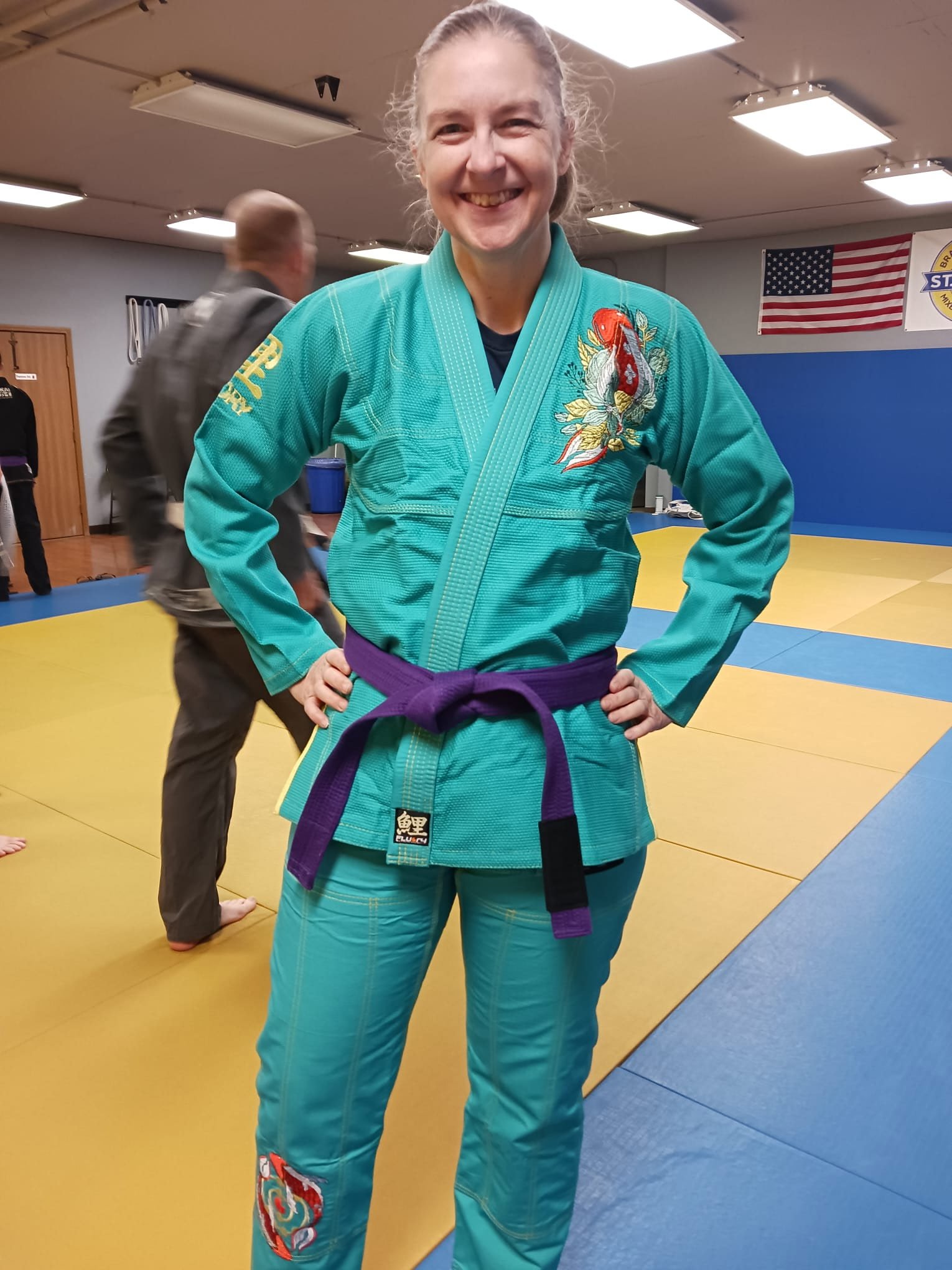
The gi, literally “clothes” or “uniform” in Japanese, is the martial arts-style garb often worn by jiu jitsu players. A BJJ gi is made of heavy fabric and is very similar to the uniform worn in judo. We do not wear the gi for the sake of tradition or ceremony, but because it changes the game in very interesting and rewarding ways. As you develop, you will find that your gi and your opponent’s gi are weapons! You will learn how to use the gi as a tool to control and even submit your opponent. Making tool-use a part of the jiu jitsu game introduces a fascinating plane of technical complexity! There is also an aesthetic aspect to the gi, and many jiu jitsu players see their gi as an expression of their personal style!
We will have gis from Elite Sport in stock at the gym and we can order a wider selection (see the Elite Sports Catalogue here), so buying a uniform will be easy.
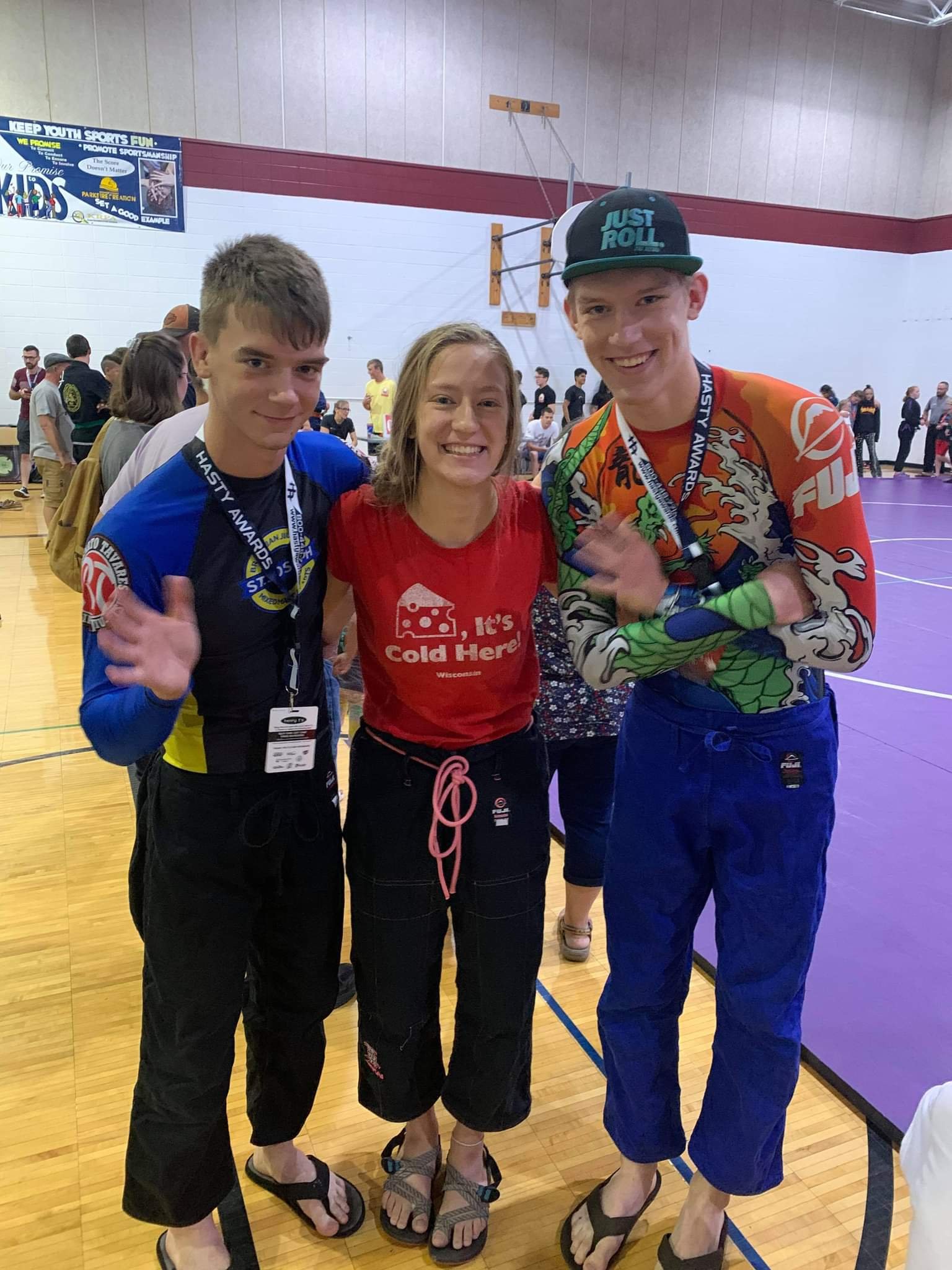
We don’t always wear the gi in jiu jitsu, and the aptly named “no-gi” style is equally a part of the art. Going no-gi definitely changes the game, and that is good thing — all the more opportunities to meet challenges and develop techniques. No-gi jiu jitsu tends to be more fluid and faster paced. There are submission techniques that are much easier to use in no-gi, and this opens a new plane of possibilities. There is also an aesthetic aspect of a player’s no-gi garb!
Madd House BJJ welcomes all people who want to develop as jiu jitsu players and human beings, whatever their preferred costume! We strongly believe that there are virtues to be gained by both styles of training. We offer gi and no-gi classes and we encourage our members to be involved in both. At the end of the day, however, it will be up to you to decide which game, or games, you want to play!
All training is good training!

So what are the belts?
You have probably noticed that the gi includes a fabric belt the BJJ player ties around his or her midsection. The belt keeps your gi together and provides you and your opponent with an additional tool!
The belts also have symbolic meaning, which is shown by their color: white, blue, purple, brown, and black. Your belt expresses your progress toward developing an effective game. Humans are symbolic animals, and we enjoy outward signs of our successes. We also need concrete goals to guide us in our struggles to improve. BJJ belts provide symbols that do all of this important work for us by providing major landmarks signifying progress toward mastery. The belt also disambiguates the situation by telling you what you are getting into when rolling with an opponent. For this reason, BJJ competitions are scaled by belt-ranks.
Here is a brief description of each belt:
White Belt: Welcome to the Madd House! You will be learning to survive in the “deep end of the pool.” Don’t worry, we’ve all been there, and it will be fun. Your training emphasis should be on basic jiu jitsu movement patterns, escaping from an opponent’s control, keeping a “guard,” and learning to “sweep” an opponent.
Blue Belt: We are getting somewhere! You now know how to get yourself out of trouble, so you can focus more on making trouble for the other guy! You will be spending more time on takedowns, “passing the guard,” advancing to control positions, and applying submissions.
Purple Belt: Now it’s getting really fun, because you are developing a dangerous game of your own! Your focus at this point is to become a serious puzzle for higher belts and a “finisher” against lower belts.
Brown Belt: Your “A Game” is solidified. You have a finely honed set of techniques you can get on just about anyone! Now you can broaden that base, take a breath and chill out as you explore lots of other possibilities. You should also make sure that your “white belt basics” have reached the point of true mastery. At brown belt it is also time to start taking more responsibility for developing your BJJ friends by offering advice and even conducting some classes.
Black Belt: You have reached technical mastery in a broad spectrum of BJJ skills, and you are recognized as such by your peers who have made that arduous journey. You are not finished learning, but now is the time to teach and lead.
Promotion does not come easily in BJJ! Even with very consistent training, it will take someone about ten years to achieve the black belt. Very few people make it that far, but at Madd House BJJ our dream is that someday our mats will be crowded with black belts!
Chris Hautter, a renowned BJJ practitioner and teacher, once said something to the effect that you are going to get ten years older, but the question is whether in the meantime you will earn a black belt. That choice is up to you.
Exclusively no-gi players are promoted by the same belt system, and they can express this by the color of the rash guard they wear when training or competing.
Note Well: There is a separate belt system for children 17 and under, that involves much more frequent promotion. Kids especially need landmarks to guide them and affirmations of their progress!